That long blank wall behind the sofa is doing nothing for the room, and the print you bought six months ago is still rolled up in its tube. If you rent, there's a particular kind of paralysis that sets in around picture hooks: you want the art up, but you also want your deposit back. The two aren't in conflict. Hanging art in a rented flat is entirely doable, as long as you choose the right fixings and know how to undo them.
Most tenancy agreements include a clause about not making alterations without permission, and picture hooks can fall under that. Read the wording once so you know where you stand. In practice, what landlords and letting agents care about is whether the wall looks the way it did on the check-in inventory when you hand back the keys. Small filled holes are usually treated as ordinary wear and tear rather than damage. If your agreement is genuinely unclear, a quick email asking whether picture hooks are acceptable is worth sending — you'll have the answer in writing.
There's no single best fixing; there's a best fixing for the weight of the thing you're hanging and the surface you're sticking it to. Removable adhesive hooks and strips have improved a lot and now cover most of what a renter needs. The catch is surface preparation, which is where most failures happen.
Two practical warnings. Adhesive strips lose grip in humid rooms, so think twice above a bath or beside a hob. And they fail when they're overloaded, so respect the weight printed on the packet rather than guessing.
This is the step people skip, and it's the one that saves the most holes. Cut paper to the size of each frame — newspaper, lining paper, offcuts from a delivery box — and tape the shapes to the wall with low-tack masking tape. Step back, make a cup of tea, and look at it properly. Come back the next morning. Moving paper is free; moving hooks is not.
A reliable rule of thumb is to put the centre of a single piece at eye level, roughly 145–150cm from the floor. Above furniture, aim for a gap of about 15–25cm between the bottom of the frame and the top of the sofa, sideboard or bedhead. Hang it too high and the art will look like it's floating away from the room.
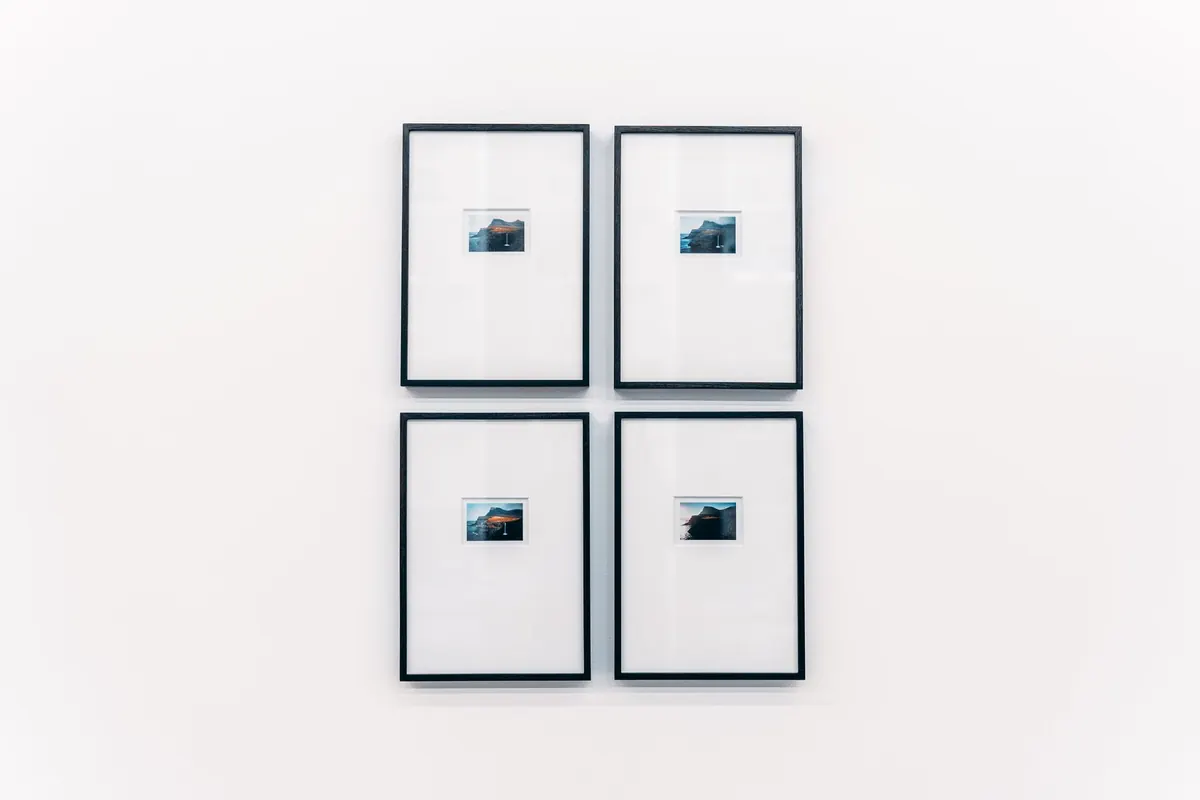
For a group, keep the gaps between frames consistent — somewhere around 5–8cm reads as intentional, while wider gaps start to look accidental. There's no requirement to hang an odd number or to match frame sizes. What matters is that one line looks deliberate: either the centres of the frames align horizontally, or the group shares a common top or bottom edge. Pick the alignment that suits your arrangement and stick to it.
Sometimes adhesive just won't do it — a heavy glazed frame, a mirror, anything over a couple of kilos. A traditional picture hook is a perfectly reasonable choice in a rental. It taps into the plaster with a small angled hole, roughly the width of a pencil lead, which fills easily. Use the smallest hook that suits the weight, tap it in gently to avoid blowing out the plaster, and don't drive it into a spot where you can feel a hollow behind. Avoid screws into brick or anything that needs a rawl plug; that's a job for a professional and a conversation with your landlord.
Removal day matters as much as hanging day. Go slowly and the wall will forgive you.
Deposit disputes are decided by comparing the check-in inventory and photos with the state of the property at check-out, so keep your own record. And if a claim does arise and you think it's unfair, you can raise it through the tenancy deposit protection scheme your deposit was registered with. For anything beyond that, it's worth taking proper advice.
Hang the art. Well-chosen fixings, a paper template and half an hour with a tube of filler are all that stand between a blank rented wall and a room that finally feels like yours.
Photo: Andrea De Santis / Pexels
A practical spring checklist for UK homes: cleaner windows, lighter textiles, brighter accessories and fresh...
Learn how to combine linen, velvet, wool and cotton cushions by texture, scale and colour, and layer them...
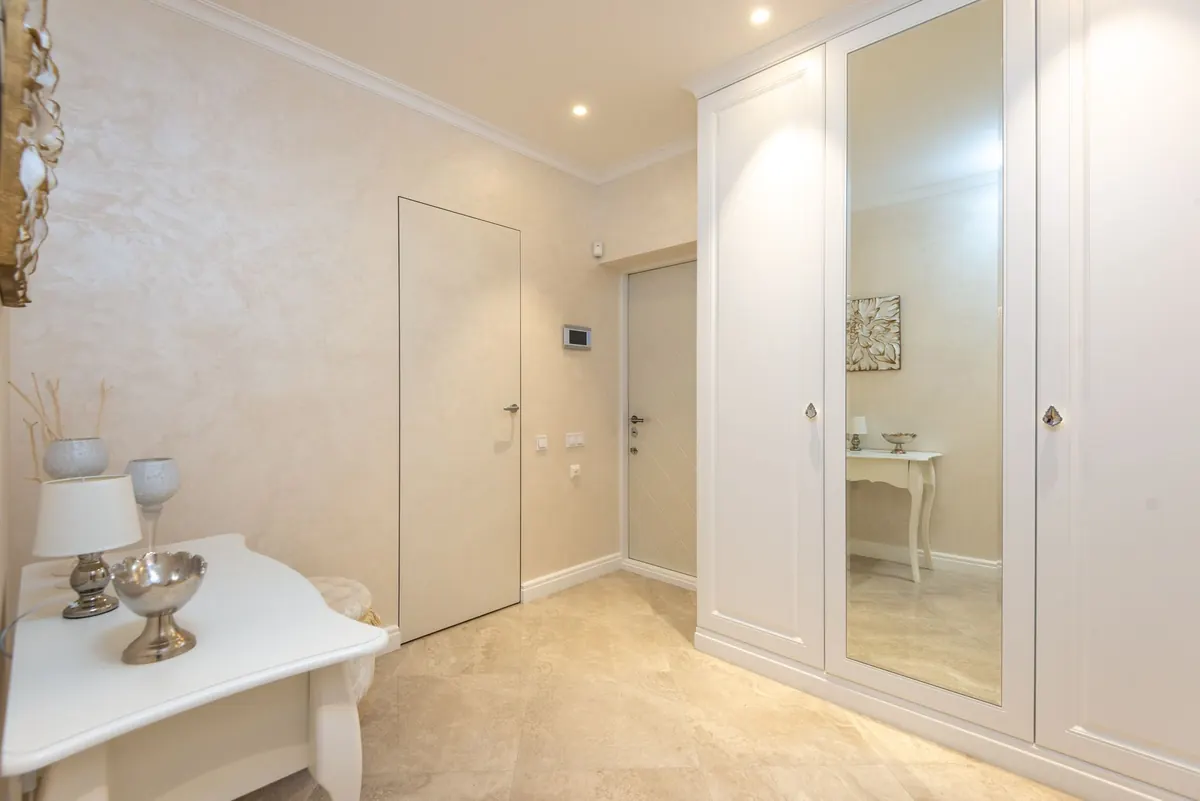
Ten practical ways to make a small UK hallway feel wider and brighter, from oversized mirrors and layered lighting...

Feather-light inspiration for beautiful rooms..